The Communities That Quietly Shape Careers in Construction

Why No One Advances Alone in a Rapidly Changing Industry
Technology in the construction industry moves fast. New software tools appear, workflows evolve, and expectations shift almost overnight. For professionals responsible for estimating, project management, document control, or digital workflows, keeping up can sometimes feel like chasing a moving target.
The reality is that no single person can keep up with everything alone.
The professionals who tend to grow the fastest are rarely the ones trying to solve every problem in isolation. More often, they are the ones connected to communities of people who are learning together.
Professional learning communities, whether they meet in person or exist online, quietly shape careers across the design and construction industry. My own career is a direct example of how powerful those communities can be.
A User Group That Changed My Career
Years ago, when Building Information Modeling was beginning to gain traction in the industry, I became fascinated with the potential it held. At the time, I was working in the Building Services division of a multi-disciplined engineering firm, and I sensed that mastering emerging technology could open doors for both my career and the team around me.
Our BIM implementation was ambitious. It included structural, mechanical, electrical, plumbing, fire protection, civil engineering, and even laser scanning workflows. The scale of what we were trying to accomplish was significant, and there was no clear roadmap for how to do it well.
So I made it a personal mission to learn everything I could.
What started as curiosity quickly turned into a hobby. Nights and weekends were spent experimenting, studying new workflows, and trying to stay ahead of the curve. During that time, I discovered a local Revit User Group in the Minneapolis area.
That group turned out to be one of the most valuable learning environments of my career.
The room wasn’t filled with world-class experts (except for Jamie). What made it powerful was that many people there were simply a few steps ahead of me. They had already encountered problems I hadn’t yet faced. They had discovered solutions I hadn’t thought of.
Each meeting became a collaborative brainstorming session. Someone would share a challenge they were facing, and suddenly the room was filled with ideas and experiences from different perspectives.
Those conversations went far beyond learning which buttons to click in the software.
They explored workflows, coordination challenges, and ways new technology could improve how our companies operated. Partnerships formed through those relationships. Mentorship happened naturally. And opportunities appeared that shaped the path of my career, including at least two of the company transitions I made later on.
Looking back, it wasn’t just a user group.
It was a room full of professionals figuring things out together.
The True Value of Professional Learning Communities
Over the years, I’ve participated in many professional communities across the construction and technology landscape. When they are healthy and active, their impact can be remarkable.
One of the greatest benefits is how quickly learning accelerates. In a strong community, someone has often already solved the problem you are trying to figure out. Instead of spending hours experimenting alone, you can learn from someone who has already walked that path.
Communities also expose professionals to new ways of thinking. An estimator might approach a drawing set very differently from a project manager. A specialty contractor might develop workflows that designers have never considered. When these perspectives collide in a productive environment, new ideas emerge that benefit everyone involved.
Mentorship also happens naturally in these spaces. Some of the most valuable advice I’ve received in my career came through informal conversations with peers who had simply been working in the industry longer than I had. Their insights helped me avoid mistakes and recognize opportunities I might have missed.
What I find especially rewarding now is seeing the cycle repeat itself. Some of the most active and knowledgeable members in the communities I’m part of today were once asking me very basic questions. Over time, they kept learning, experimenting, and pushing further. Today, many of them are good friends who have taken the ball even farther, and in many cases, I find myself learning from them.
Honestly, that might be the part I’m most proud of.
Communities don’t just transfer knowledge, they multiply it.
Not Every Online Community Works the Same
Of course, not every online community delivers the same experience.
Many forums attract enormous audiences, but the quality of engagement can vary widely. In some groups, you post a question and simply hope someone responds. If they do, the conversation often ends there. Follow-up questions may never receive an answer as new topics quickly replace old ones.
Other communities drift into cycles of frustration where conversations focus on software costs, bugs, or complaints rather than solutions. While those discussions may have their place, they rarely lead to meaningful progress.
Some platforms also become dominated by promotions or commercial noise, making it difficult to find genuine advice.
Even well-intentioned communities can struggle to maintain a productive culture as they grow.
That experience has taught me an important lesson.
The value of a professional learning community has far more to do with its culture than its size.
What Makes a Learning Community Truly Valuable
The most effective communities share several characteristics that make collaboration possible.
Professionals are willing to share their knowledge rather than guard it. Experienced members contribute insights because they remember what it felt like to be learning themselves. Newer professionals bring curiosity and fresh questions that spark meaningful discussions.
Respectful dialogue becomes the norm. Instead of criticizing ideas, members explore them together and build on each other’s experiences.
But there is one quality that stands out above all others.
Connection.
The strongest communities eventually become more than just places to ask technical questions. People begin recognizing familiar names and voices. Conversations evolve beyond individual problems and expand into broader discussions about workflows, leadership, and professional growth.
Over time, something unexpected begins to happen.
Friendships form.
Those relationships often become the most valuable outcome of the entire experience.
Where Professional Learning Communities Exist Today
Professional learning communities now exist across many different parts of the construction industry.
Some meet in person through local user groups where professionals can share ideas face-to-face. Others operate entirely online through forums, social platforms, industry podcasts, and association communities.
Many professionals participate in discussions on platforms like Reddit or Facebook groups. Others engage through software user groups, industry associations, or community spaces connected to professional tools.
There are also Bluebeam User Groups across the United States and around the world. I’ve had the privilege of presenting at many of them over the years as my own involvement in the community grew.
Those events typically focus more on presentations than conversation. They’re incredibly valuable learning opportunities, but the format is often more one-directional, with knowledge being shared from the stage rather than through group discussion.
Each of these environments serves a different purpose.
The specific platform matters far less than the simple act of participating.
Because learning alongside others will always move faster than learning alone.
The Vision Behind the Bluebeam Brainery
In 2021, I started building a community focused on professionals who use Bluebeam in their daily work. The goal was never simply to create another place where people could post technical questions. There are already many places online where that happens, and many more have been created since.
What I hoped to create instead was a space where professionals could collaborate, share real-world workflows, and learn from each other across different parts of the construction industry.
This week that community will reach an exciting milestone.
The Bluebeam Brainery Professional Learning Community is about to welcome its 5,000th member. One of the most rewarding parts of the Brainery has been watching real friendships form between professionals across the industry. This image shows just a few of the incredible professionals who make the Bluebeam Brainery such a collaborative and supportive community.
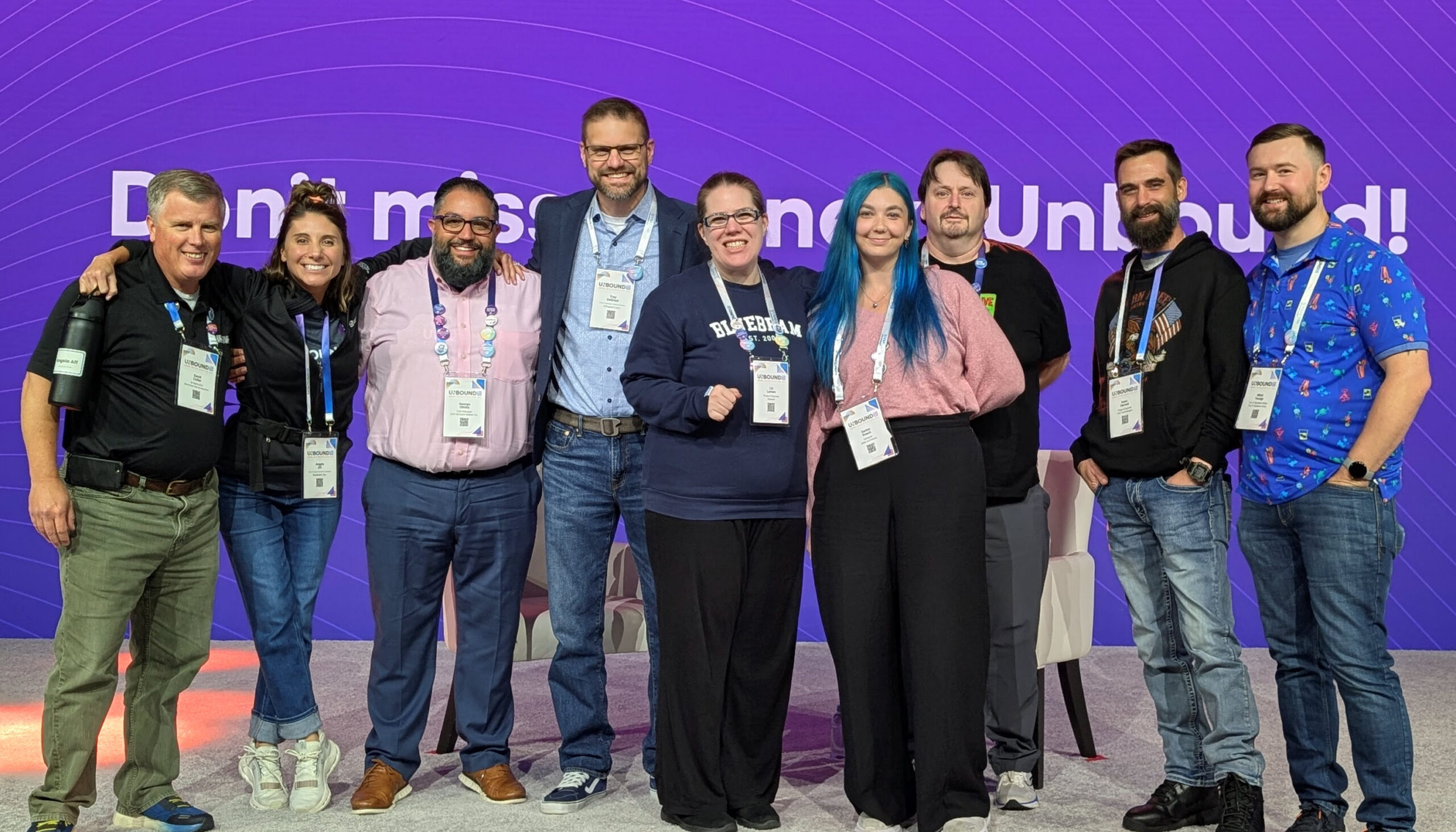
One of the things I’m most proud of is the friendships that have formed inside that community. Professionals from different companies, trades, and even different parts of the world are helping each other solve problems and improve their workflows.
Another thing that sets the Brainery apart is the way members approach questions. If someone doesn’t fully understand what another person is asking, they don’t ignore the post and move on. They ask clarifying questions so they can better understand the challenge and help solve it.
Watching those interactions unfold reminds me of those early user group meetings years ago in Minneapolis.
The same spirit of curiosity and generosity is still there.
When professionals gather with the intention of helping each other grow, the entire industry benefits.
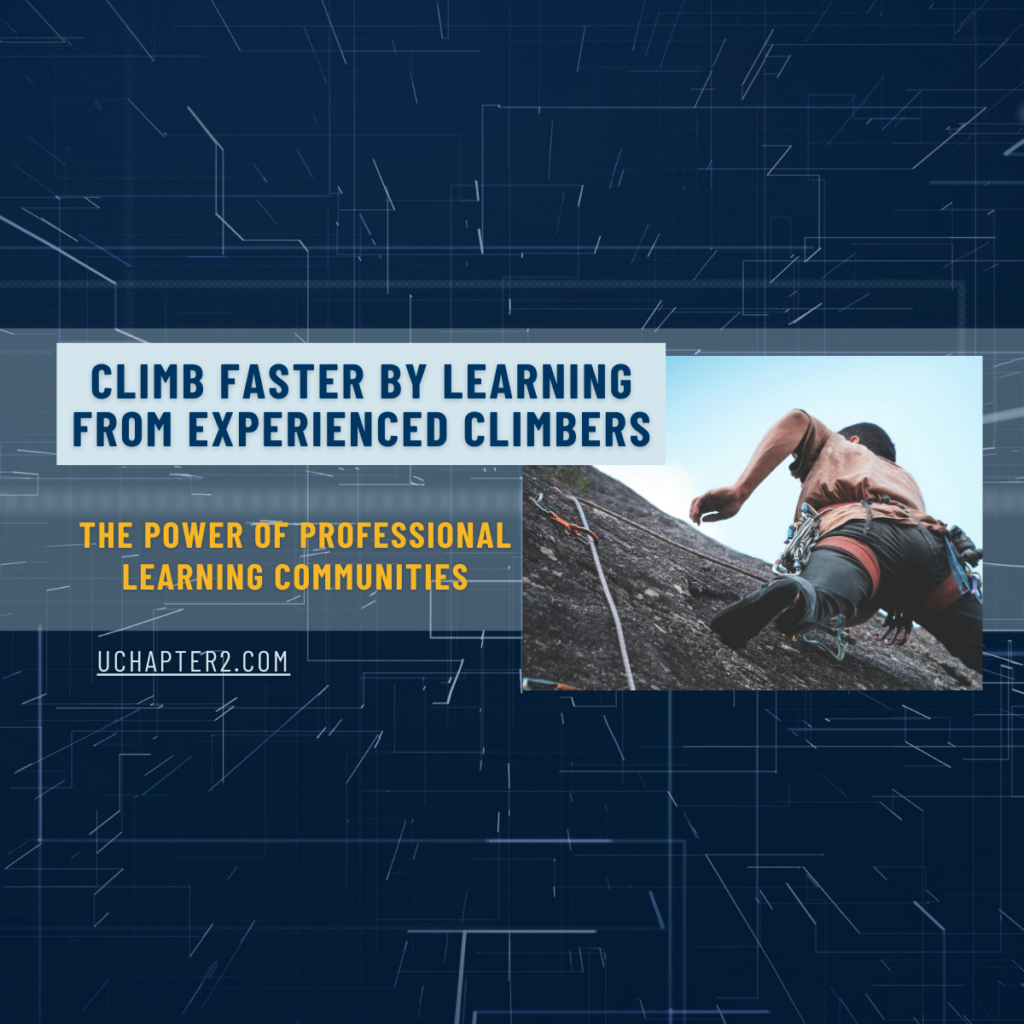
Years ago, I spent a lot of time rock climbing. One thing you learn quickly when you’re hanging on a wall is that it helps tremendously to watch someone who has already climbed the route ahead of you. They can see holds you might miss, warn you about tricky sections, and sometimes point out a better path entirely.
Professional learning communities work the same way. When you surround yourself with people who are just a little further along the climb, you start to see opportunities, shortcuts, and solutions that would have been much harder to discover on your own. The fastest way up a rock wall isn’t guessing your way up the holds. It’s learning from someone who has already climbed the route.
Your Career Often Grows at the Speed of Your Community
Looking back over my career, many of the most important breakthroughs didn’t come from a textbook or a training manual.
They came from people.
From conversations.
From shared experiences.
From communities where professionals were willing to help each other learn.
Technology will continue to evolve, and new tools will keep reshaping the way construction teams work.
But one thing remains constant.
Professional learning communities are becoming one of the most powerful drivers of innovation in construction technology and digital workflows. Professionals who surround themselves with curious, collaborative communities tend to move further, faster.
There are many professional learning communities across our industry worth exploring. If you find one where people are generous with their knowledge and eager to learn from each other, you have likely found something valuable.
You might even say you owe it to your future career to be part of one.
Common questions:
Why do professionals in construction tend to grow faster inside communities than on their own?
Because someone in the room has usually already solved the problem you’re facing. Learning accelerates when you can borrow from other people’s experience instead of figuring everything out through trial and error. The goal isn’t to find world-class experts, it’s to find people who are a few steps ahead of you.
What makes a professional learning community valuable beyond the technical content?
The conversations that happen around the content. Mentorship, partnerships, and career opportunities tend to come out of those relationships naturally, not from the formal agenda. The user group, forum, or community becomes the context. What grows inside it is harder to plan for and often more valuable.
And if you happen to be looking for a Bluebeam community centered around Bluebeam workflows and real-world construction experience, you’re always welcome to join the conversation in the Bluebeam Brainery.
Are you looking to learn from other industry experts? We have several live webinars coming up. Get Registered on the UChapter2 Events Page.
Interested in learning more about UChapter2 training and services? Contact Us.
Responses