
When Every Consultant Marks Up the Same Set, Someone Has to Own the Chaos

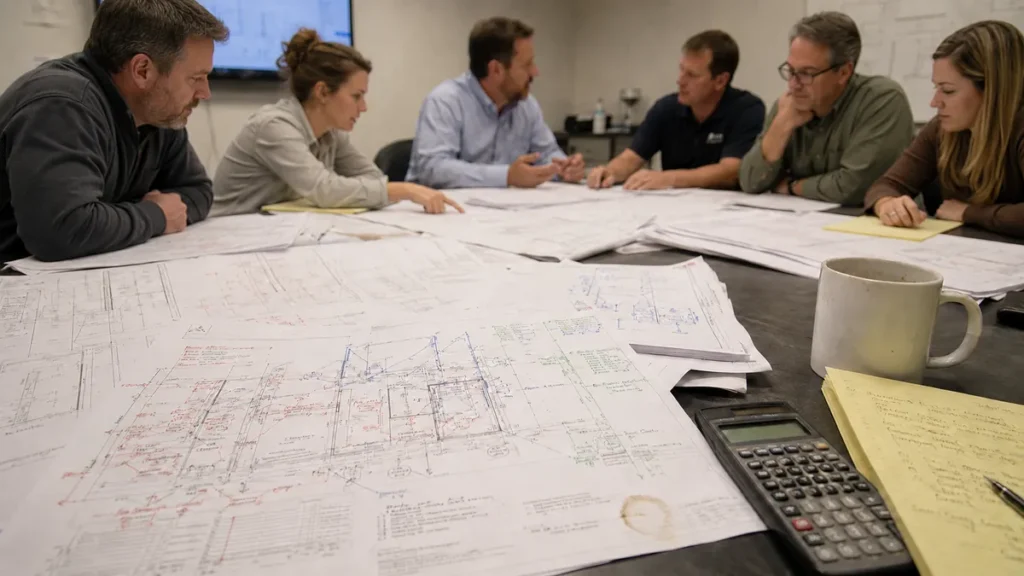
Open a coordination set two weeks before a deadline and you’ll usually find the same thing. Five colors of markups. Three naming conventions. A structural comment on sheet S-201 that quietly contradicts an architectural comment on A-401, and nobody’s caught it yet because nobody’s looking at both sheets at the same time. Every consultant on the project is doing their job. The architect is marking up circulation. The structural engineer is flagging a beam depth that doesn’t work with the ceiling plan. Mechanical is redlining a duct run through what structural just changed. Civil is somewhere else entirely, on a set that’s already one revision behind. Each set of markups makes perfect sense in isolation. Together, they’re a mess that someone has to untangle by hand, usually the week before it matters most. I spent 18 years on the design side before I ever stood in front of a Bluebeam class, and I sat in that exact seat more times than I can count. Structural doesn’t get to review in a vacuum. Every beam size, every connection detail, every deflection calculation lives next to somebody else’s work, and somebody else’s deadline. I know what it feels like to open a set and realize three people have already marked it up, none of them talked to each other, and I’m the one who has to figure out which comment wins. This isn’t limited to consultant coordination on a design team, either. The same breakdown happens in electronic plan review at a city or municipality. Planning, fire, public works, and building are all marking up the same permit set independently, on their own timeline, and nobody’s reconciling what each department found until the applicant gets four sets of comments back that don’t agree with each other.
The Real Problem Isn’t the Number of Consultants
It’s tempting to think multi-consultant coordination breaks down because there are too many cooks. That’s not it. The number of consultants on a project isn’t going anywhere, and it shouldn’t. The problem is that most teams are still running parallel review with no shared source of truth. Everyone marks up their own copy of the PDF, emails it back, and somebody on the GC or architect’s side is left trying to reconcile five different files into one coherent picture. That reconciliation work is invisible until it fails. Nobody budgets time for it. Nobody assigns it to a specific person with a specific process. It just happens, usually late, usually by whoever noticed the conflict first, and it’s the single biggest reason review cycles stretch from days into weeks.
What Actually Fixes This
The teams that get multi-consultant review right aren’t smarter or more disciplined than everyone else. They’ve just stopped treating coordination as an email problem and started treating it as a workflow problem. Three things change when they do.
One shared environment, not five separate copies
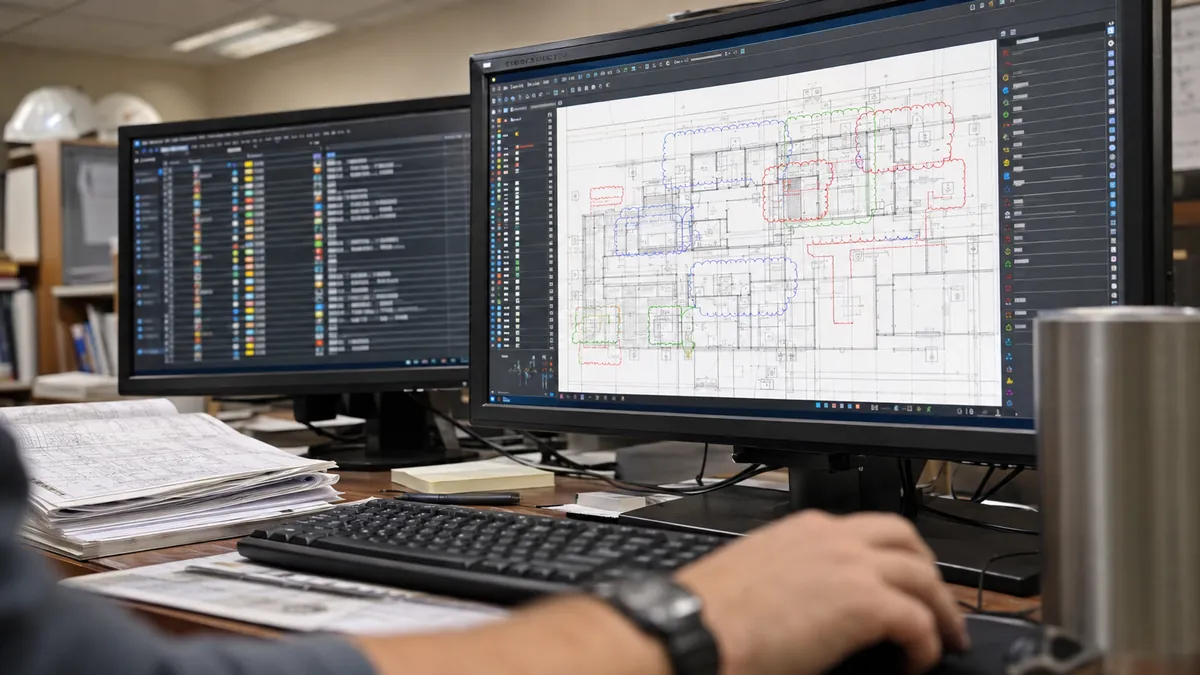
The moment every consultant is marking up their own PDF and emailing it around, you’ve already lost. A Bluebeam Studio Session puts everyone in the same live file at the same time, so the structural comment and the mechanical comment land on the same set, in real time, where the conflict is visible immediately instead of three weeks later. A Studio Project does the same thing for ongoing document control, so nobody’s working off a set that’s already out of date. Inside a Studio Project, Sets and the Slip Sheet function keep everyone on the same current drawings without anyone re-uploading a thing. If two people need to dig into the same sheet together, you can push it into a Studio Session temporarily, work through it live, then slip it back down to the Project when you’re done. Either way, the goal is the same: one current version, one place everyone works, no reconciliation required because there was never a fork to reconcile.
A shared language for markups, not five different ones
Once everyone’s in the same file, the next failure point is that every consultant still marks things up their own way, with no consistency from file to file. One firm uses clouds for everything. Another skips the cloud and just drops a plain comment in a text box, so it’s easy to miss unless you’re scrolling the Markups List instead of scanning the sheet. A third color-codes by discipline, but nobody agreed on which color means what. Custom columns in the Markups List, a shared subject convention, and layers assigned by discipline standardize all of that in about an hour of setup and save days on every review cycle after that. It’s not exciting work. It’s the difference between a Markups List someone can sort and filter in thirty seconds and one that takes an afternoon to even understand.
Someone owns consolidation, by name
This is the piece most teams skip entirely. Even with a shared file and a shared markup language, somebody still has to be the person who says “this comment overrides that one” when two consultants land on the same detail. That’s not a committee decision made in a meeting. It’s one named person, usually on the GC or lead design side, whose job is to walk the Markups List, resolve conflicts, and confirm sign-off before the set moves forward. Without that person, every conflict becomes a scheduling problem: another meeting, another round of emails, another few days added to a schedule that didn’t have them to spare.
This Isn’t About More Software. It’s About Fewer Handoffs.
None of this requires a new platform or a bigger IT budget. Most firms already have the tools. What’s missing is the system that tells everyone how to use them together, and that’s the part that gets skipped when a company adopts Bluebeam one department at a time instead of building the workflow across the whole team from the start. I’ve built this kind of coordination system before. The clearest example is large cities, several departments, planning, fire, public works, building, all reviewing the same permit set at once. If anything, that’s the harder version of this problem: more reviewers, more competing priorities, and a permit that doesn’t move until every department signs off. Strip away the labels and it’s the same coordination gap described here, whether the reviewers are consultants on a design team or departments inside a municipality. If your team is still reconciling five sets of markups by hand every review cycle, that’s not a discipline problem. It’s a system that was never built. A Custom Workflow Assessment is where we map out exactly where your review process breaks down and what it would take to fix it, before any tool gets built. You leave with a roadmap you can act on either way, whether you bring us in to build it or not. You can also see how this fits into the bigger picture of what happens after Bluebeam training in What Happens After Bluebeam Training? The Gap Most Companies Miss, which covers the same idea from a different angle: tools alone don’t fix a broken process. A system does.
Frequently Asked Questions
What’s the difference between a Studio Session and a Studio Project?
A Studio Session is for live, real-time collaborative markup, everyone working in the same file at the same moment. A Studio Project is for ongoing document control across a project’s lifespan: Sets and the Slip Sheet function keep everyone on the same current drawings without anyone re-uploading files. When two people need to work through the same sheet together, we’ll temporarily push it into a Studio Session, work it live, then slip it back down into the Project once we’re done. Most multi-consultant coordination problems need both: Sessions for focused live review, Projects for version control in between.
Do all our consultants need to be on Bluebeam for this to work?
It helps, but it’s not required for every firm on day one. What matters more is that whoever owns the coordination role, usually the GC, the architect, or the BIM/VDC lead, has a shared environment and a consistent markup convention in place. Consultants who aren’t using Bluebeam yet can still be brought into the process; it just means someone owns translating their input into the shared set.
How long does it take to set up custom columns and layer conventions for a multi-consultant review?
Understanding the goals and building the right system the first time takes real thought, that’s not an hour project. Once it’s built, though, applying that same system to a new project is fast. You’re not remapping columns and layers from scratch every time, you’re rolling out something that’s already built. The return shows up on the very next review cycle, when the Markups List can be sorted and filtered by discipline instead of read top to bottom, comment by comment.
Who should own consolidation on a project with several consultants?
Whoever has the most visibility across all the disciplines and the authority to make a call when two comments conflict. On most projects, that’s the GC’s project manager or the lead design firm’s project architect. What matters isn’t the title, it’s that one specific person owns it, by name, instead of it being everyone’s job and therefore nobody’s.
Is this only useful on large, complex projects?
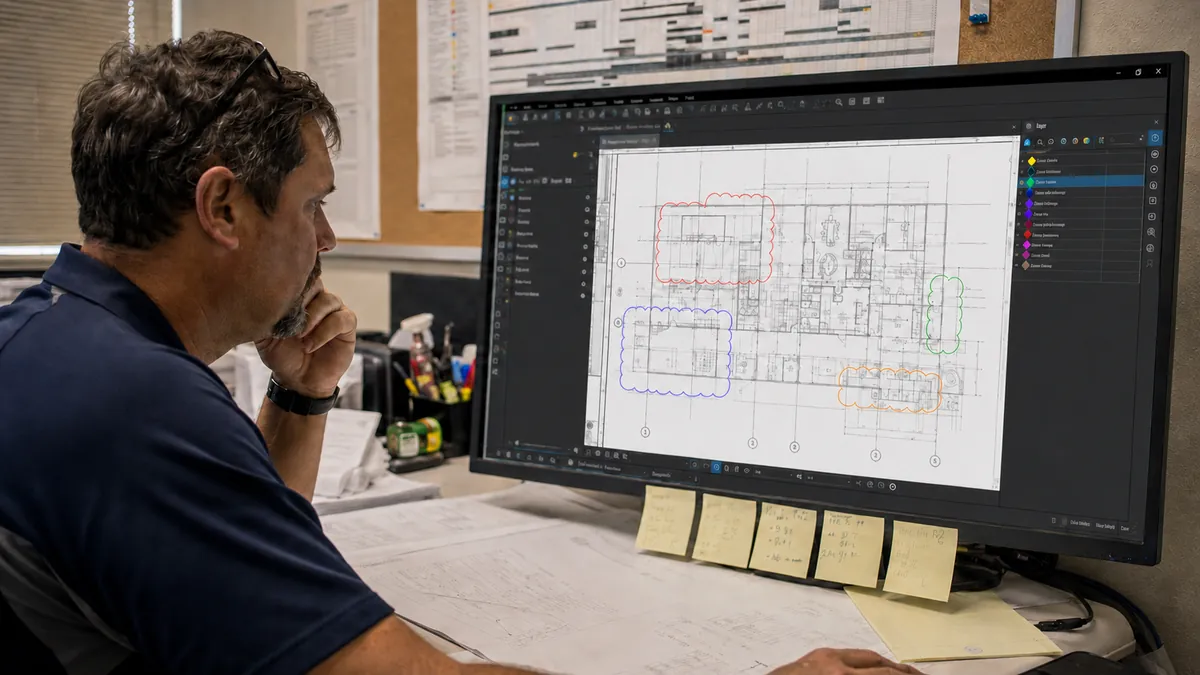
No. I’ve seen this exact breakdown in-house, inside a single company, not even across firms. The design engineer’s markups and the engineer of record’s markups contradicted each other, and I was the one left to figure out which one was right, usually working late into the night to sort it out before the next deadline. The complexity that causes the problem isn’t the size of the project or the number of firms involved. It’s the number of separate copies of the truth floating around.

Responses